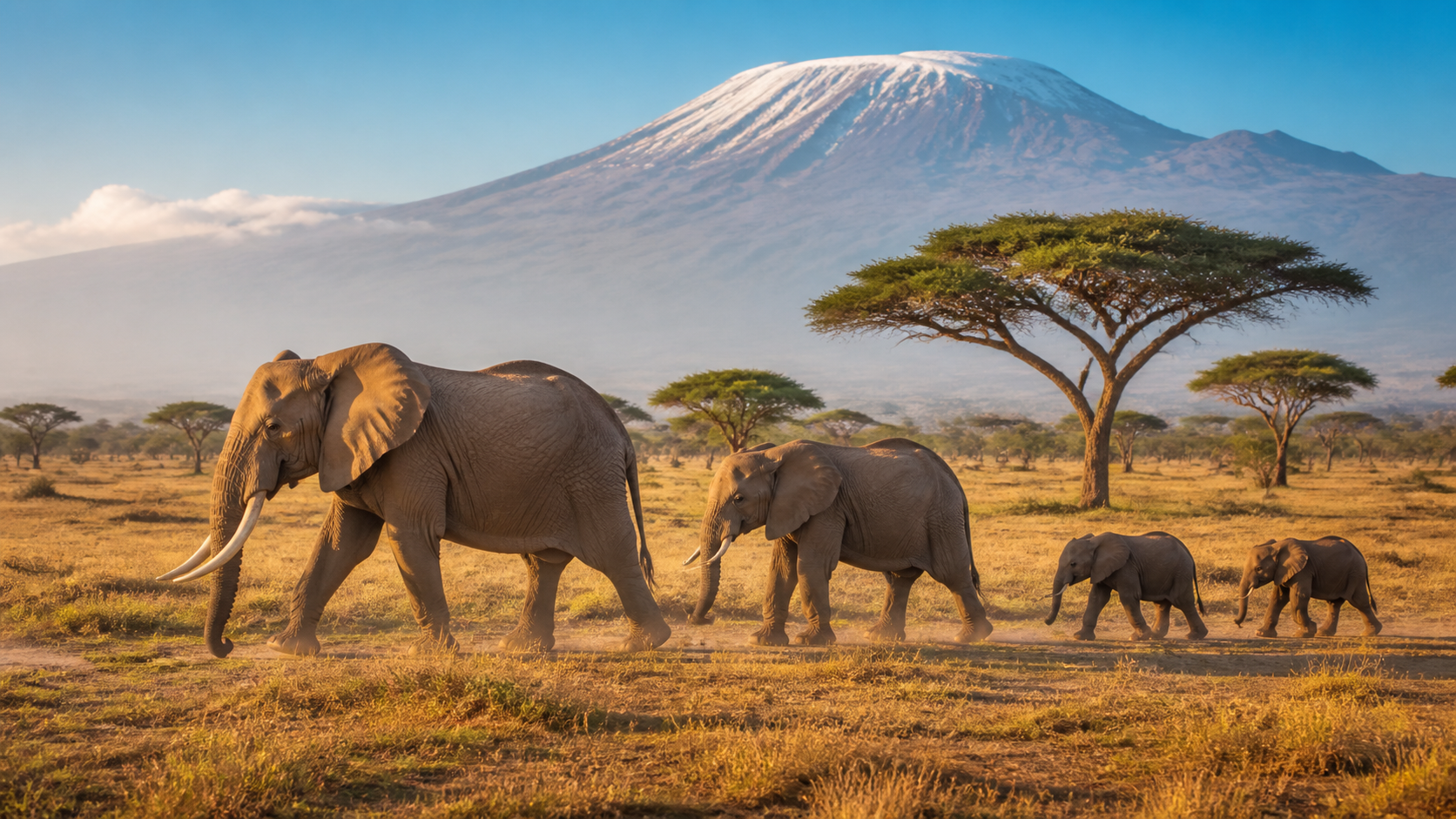
Kenya National Parks Guide
Understand the main park choices before planning a route or booking a safari operator.
Kenya Wildlife Service conserves and manages many of Kenya's national parks, reserves, sanctuaries and marine protected areas. Park rules, fees and access details can change, so use this page as a planning guide and confirm final details with KWS or your operator.
Major Parks for First-Time Visitors
| Park | Why Go | Works Well With |
|---|---|---|
| Nairobi National Park | Urban-edge safari about 10 km from Nairobi's CBD, with rhinos and classic plains wildlife. | Short city stays, layovers, Giraffe Centre, elephant orphanage visits |
| Amboseli National Park | Elephant herds, wetlands, open views and possible Kilimanjaro backdrop. | Two-night safari from Nairobi, Tsavo, Tanzania border routes |
| Tsavo East National Park | KWS describes Tsavo East as Kenya's largest national park and a major wildlife safari destination. | Mombasa, Diani, Watamu, SGR-linked coast routes |
| Tsavo West National Park | Varied scenery, volcanic landscapes, springs, hills and a different feel from Tsavo East. | Amboseli, Tsavo East, coast-safari itineraries |
| Lake Nakuru National Park | Compact Rift Valley park for rhinos, viewpoints, birding and woodland-grassland drives. | Naivasha, Maasai Mara, Nakuru town |
| Mount Kenya National Park | High-altitude trekking, forests, alpine scenery and UNESCO-listed mountain landscape. | Nanyuki, Aberdare, central Kenya road trips |
Marine Parks and Coast Add-Ons
Kenya's coast is not just beach hotels. Marine parks and reserves protect coral reef ecosystems and support snorkelling, diving and glass-bottom boat trips when conditions are suitable.
- Watamu and Malindi: Useful bases for marine excursions, coastal forests and north-coast history.
- Kisite-Mpunguti: Commonly visited from the south coast for snorkelling and dolphin-watching excursions; use responsible operators.
- Diani Chale: Listed by KWS among park destinations and useful for visitors staying around Diani.
National Park or Conservancy?
National parks and reserves are not the only safari model in Kenya. Private and community conservancies can offer lower vehicle density, night drives or walking activities where permitted, and direct community benefit when well run. They also have different fees, rules and access arrangements.
- Ask whether your overnight stay is inside a park, outside a gate, in a conservancy or in a community-owned area.
- Clarify which fees are included and which are paid separately.
- Check whether game drives happen in the reserve, the conservancy or both.
- For families, confirm age limits for walking safaris, balloon flights and unfenced camps.
Practical Park Advice
- Fees: Do not rely on old blogs for park fees. Check KWS or your operator shortly before travel.
- Payments: Some parks and services use digital payment systems. Ask operators how fees will be paid and receipted.
- Roads: Wet weather can change journey times, especially on unpaved access roads.
- Health: Malaria risk varies by region and season. Use current medical travel advice for your itinerary.
- Wildlife: No guide can guarantee a specific animal. Choose routes for habitats and time in the field, not promises.
Park Planning Rule
Plan by travel time, not just distance. A park that looks close on a map may still require a slow transfer because of traffic, road condition, park gates or internal tracks.